Recycling and Sustainability for Gardening Services Parsons Green
At Gardening Services Parsons Green we make eco-friendly waste disposal and a sustainable rubbish gardening area core to every project. Our approach combines on-site segregation, smart logistics and community partnerships to turn green waste into value while reducing landfill. This page explains our targets, local routing choices, recycling activities and the low-carbon transport that moves materials.

Why green recycling matters in Parsons Green
Parsons Green recycling and sustainability isn't just a policy — it's practical action on every lawn, verge and communal garden we tend. The local borough promotes separate collection of food waste, garden waste and mixed recyclables; we align with that system by separating branches, turf and compostable material from plastics, timber and metals at source. Our standard job routine reduces contamination and helps maintain a clear eco-friendly waste disposal area at every site.
We have set a clear recycling percentage target: 70% of all material collected from our gardening works will be diverted from landfill into recycling, composting or reuse streams within two years. This target includes a specific aim of 75% for organic garden waste because green material is highly recoverable and valuable as compost.
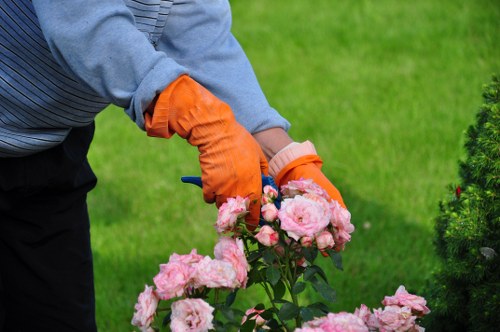
To reach these targets we operate a tiered segregation system on-site. Typical separation includes:
- Compostable green waste (grass cuttings, leaves, small branches)
- Wood and timber suitable for chipping or reuse
- Mixed recyclables (plastic pots, plant labels where accepted)
- Small quantities of inert material (soil and stone) managed separately
Local transfer stations and responsible routeing
We use nearby transfer facilities and municipal hubs to keep travel distances short and transfer times efficient. Where possible we route collected material to borough facilities and West London transfer stations that prioritise composting and material recovery. This local routing reduces carbon mileage and ensures green waste enters licensed composting and anaerobic digestion plants rather than residual waste streams.Our logistics prioritise short, direct trips to council transfer points and authorised private processing sites. When green waste is destined for composting, it goes to facilities approved by the borough or regional waste authority; other recyclables go to sorting centres that accept horticultural plastics, clean timber and metals.
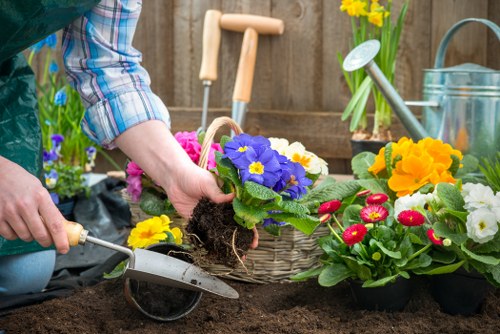
We also practice on-site minimisation: using mulching mowers to leave fine clippings as a soil-improving layer, chipping larger prunings to use as pathways and woodchip beds, and compacting inert materials to reduce transport volume. These steps support a sustainable rubbish gardening area philosophy — less waste off-site, more material reused in situ.
Partnerships with charities and community organisations are central to our reuse strategy. We collaborate with local groups and redistribution charities — donating usable plants, potted shrubs and salvaged garden furniture to community greening projects and social enterprises. Partnerships include local allotment societies, community gardens in the borough and regional charities that accept plant surplus and reusable materials.
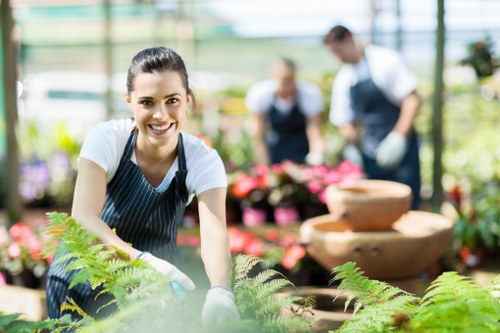
By connecting with charities we extend the recycling and reuse lifecycle: plants and soil improvers are given a second life, timber is repurposed into raised beds or communal seating, and tools or planters that are still serviceable are passed to groups that support low-income residents and local green spaces.
Low-carbon vans are a keystone of our sustainable operations. Our fleet comprises electric and hybrid vans where practical, supplemented by highly efficient Euro 6 diesel vehicles when longer distances or heavy loads demand them. Charging is scheduled to favour off-peak and renewable-energy-sourced electricity where available, further reducing the carbon footprint of each trip.
We maintain clear records to monitor outcomes against our recycling percentage target, including tonnage diverted to composting, reused materials donated to partners, and recyclables sent to accredited processors. Regular reporting helps us adapt routes, improve on-site separation training and refine our vehicle usage to lower emissions.
Community engagement is also part of our sustainability programme. We run seasonal initiatives to increase reuse of garden materials locally and support the borough's waste separation messages — for example, promoting food caddies and garden waste collections, and advising residents where plant pots and labels can be recycled or cleaned for reuse.
Practical recycling activities we routinely perform in Parsons Green include composting, chipping, material donation, and selective recycling of horticultural plastics where the local recycling centres accept them. We follow the borough's approach to waste separation while offering on-site support to ensure the right materials go to the right destinations.
Why choose a sustainable gardening partner? Choosing a service that prioritises an eco-friendly waste disposal area and a sustainable rubbish gardening area means lower landfill burden, fewer vehicle emissions and more local benefit from reused materials. It also supports the borough's wider circular economy aims by keeping useful organic matter in the soil loop.
Our commitment is measurable: ongoing monitoring, local transfer station usage, charity partnerships and a progressively low-carbon fleet combine to deliver responsible outcomes for Parsons Green green spaces. We keep the focus practical: reduce, reuse, recycle — and do it where it matters most, in the neighbourhood.
Summary of actions:
- 70% recycling target for garden and related waste
- Use of local transfer stations and authorised processing centres
- Donations and partnerships with community charities and allotments
- Low-carbon and electric vans to reduce transport emissions
- On-site mulching, chipping and reuse to minimise off-site removals